Key Takeaways
- Strong leg muscles help older adults maintain balance, mobility, and greater independence during everyday activities.
- Leg weakness may develop from age-related muscle loss, arthritis, reduced physical activity, recovery from illness, or certain health conditions.
- Exercises like knee extensions, sit-to-stand exercises, calf raises, side leg raises, and walking can safely improve lower-body strength.
- Family caregivers can support progress by encouraging regular exercise routines and creating a safe environment for physical activity.
- Consistent, moderate exercise is generally more effective than occasional intense workouts for maintaining long-term mobility.
Why Leg Strength Matters for Older Adults
Watching a loved one struggle to stand from a chair or hesitate before climbing a few stairs can be difficult. These small changes often happen gradually, but they can affect confidence, mobility, and independence over time. The good news is that maintaining leg strength doesn’t require intense workouts or expensive equipment.
Learning how to strengthen legs in the elderly starts with simple, consistent movement. Whether your loved one exercises at home, walks regularly, or participates in community wellness programs, small efforts can make everyday activities feel more manageable.
Common Reasons Legs Become Weaker With Age
Leg strength naturally changes with age, but muscle weakness doesn’t always happen for the same reason. In many cases, several factors work together to reduce strength, balance, and endurance. Understanding these changes can help you recognize when it’s time to encourage more regular movement.
Several common factors can contribute to weaker legs over time, including:
- Natural age-related muscle loss (sarcopenia)
- Arthritis and other joint conditions
- Spending more time sitting and less time walking
- Recovery after illness, surgery, or injury
- Certain medications or chronic health conditions that affect mobility
Recognizing these changes early allows you to support healthy habits before everyday activities become more difficult.
Safe Exercises That Can Help Strengthen the Legs
Simple exercises can help older adults maintain strength without placing unnecessary strain on their joints. Encourage your loved one to move at a comfortable pace, use a sturdy chair or countertop for support when needed, and speak with their healthcare provider before beginning a new exercise routine if they have existing medical concerns.
Knee Extensions
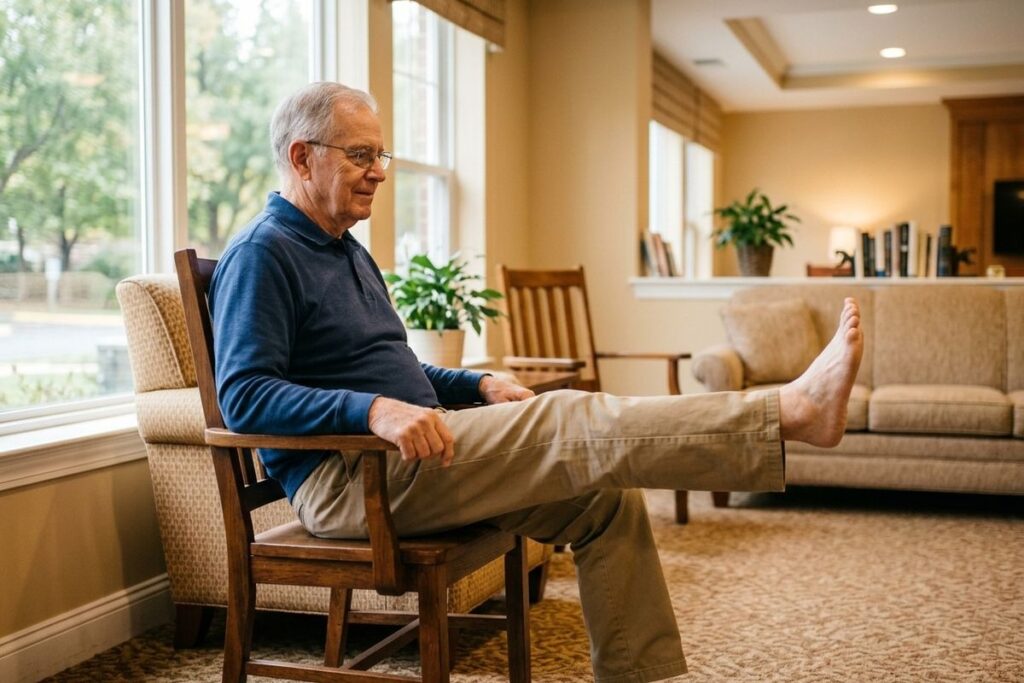
Knee extensions are a simple seated exercise you can encourage your loved one to try. While sitting in a sturdy chair, they slowly straighten one leg before lowering it back down with control. This movement helps strengthen the thigh muscles, making it easier to stand up, walk, and move through daily routines.
Sit-to-Stand Exercises
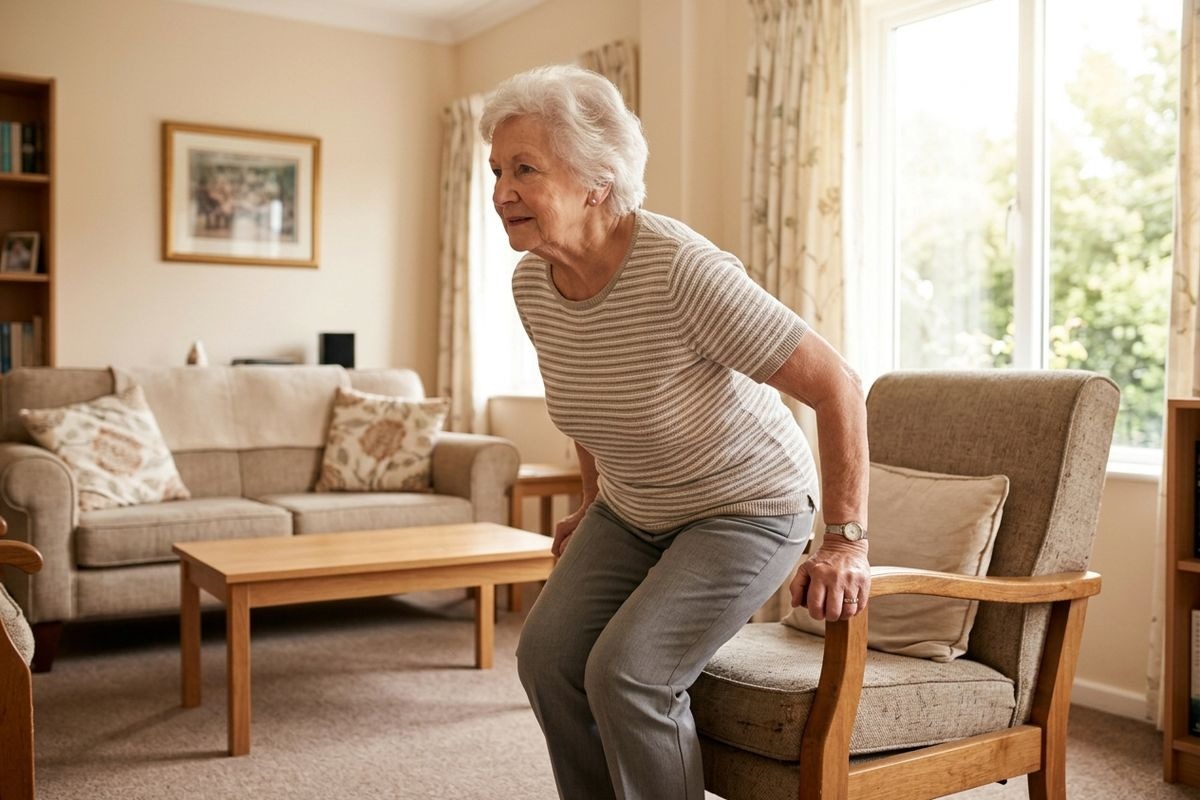
Standing up from a chair is a movement your loved one performs many times throughout the day. Practicing sit-to-stand exercises can gradually build the strength needed for greater independence. Encourage them to use a sturdy chair and move at a comfortable pace, using the armrests for support if necessary.
Calf Raises
Calf raises strengthen the lower legs and ankles, which play an important role in balance. Have your loved one stand behind a sturdy chair or countertop for support as they slowly lift onto their toes before lowering their heels back to the floor. Even a few repetitions performed regularly can help improve stability over time.
Side Leg Raises
Side leg raises target the muscles around the hips, which help support balance while walking and turning. Encourage your loved one to hold onto a chair for stability while slowly lifting one leg to the side before returning it to the starting position. Slow, controlled movements are more effective than rushing through the exercise.
Walking
Walking remains one of the easiest and most effective ways to build leg strength and endurance. You can help your loved one stay motivated by joining them for short walks or encouraging a regular walking routine that matches their comfort level. Combined with strengthening exercises, walking can help support mobility and confidence during everyday activities.
Helping Your Loved One Stay Active Safely
Building stronger legs takes patience and consistency. Rather than focusing on difficult workouts, look for simple ways to make movement part of your loved one’s regular routine. Your encouragement and support can make staying active feel less intimidating and more enjoyable.
Build Exercise Into Their Routine
Consistency matters more than intensity. Encourage short exercise sessions several days each week instead of occasional long workouts. Setting a regular schedule makes movement feel like a natural part of the day.
Prioritize Safety During Physical Activity
Choose supportive footwear, remove tripping hazards, and keep a sturdy chair or countertop nearby during standing exercises. If your loved one experiences dizziness, pain, or unusual discomfort, stop the activity and consult their healthcare provider before continuing.
Encourage Progress Without Pressure
Celebrate small improvements instead of expecting immediate results. Walking a little farther, standing more comfortably, or completing another repetition are all meaningful signs of progress. Positive encouragement often helps build confidence just as much as the exercises themselves.
Wellness Programs Can Help Older Adults Stay Active
Staying active is often easier when exercise becomes part of everyday life. At Aarondale by Retirement Unlimited, Incorporated (RUI), wellness is woven into the daily experience through opportunities that encourage movement, social connection, and healthy routines. Programs like RUI FIT help residents participate in fitness activities designed for a variety of abilities while enjoying the support of a welcoming community.
Whether someone is looking for independent living, assisted living, or memory care, regular wellness opportunities can help them remain engaged and maintain their mobility. If you’re exploring senior living options for a loved one, schedule a tour of Aarondale by RUI today to learn more about how our wellness programs can help them stay active, steady, and independent.